
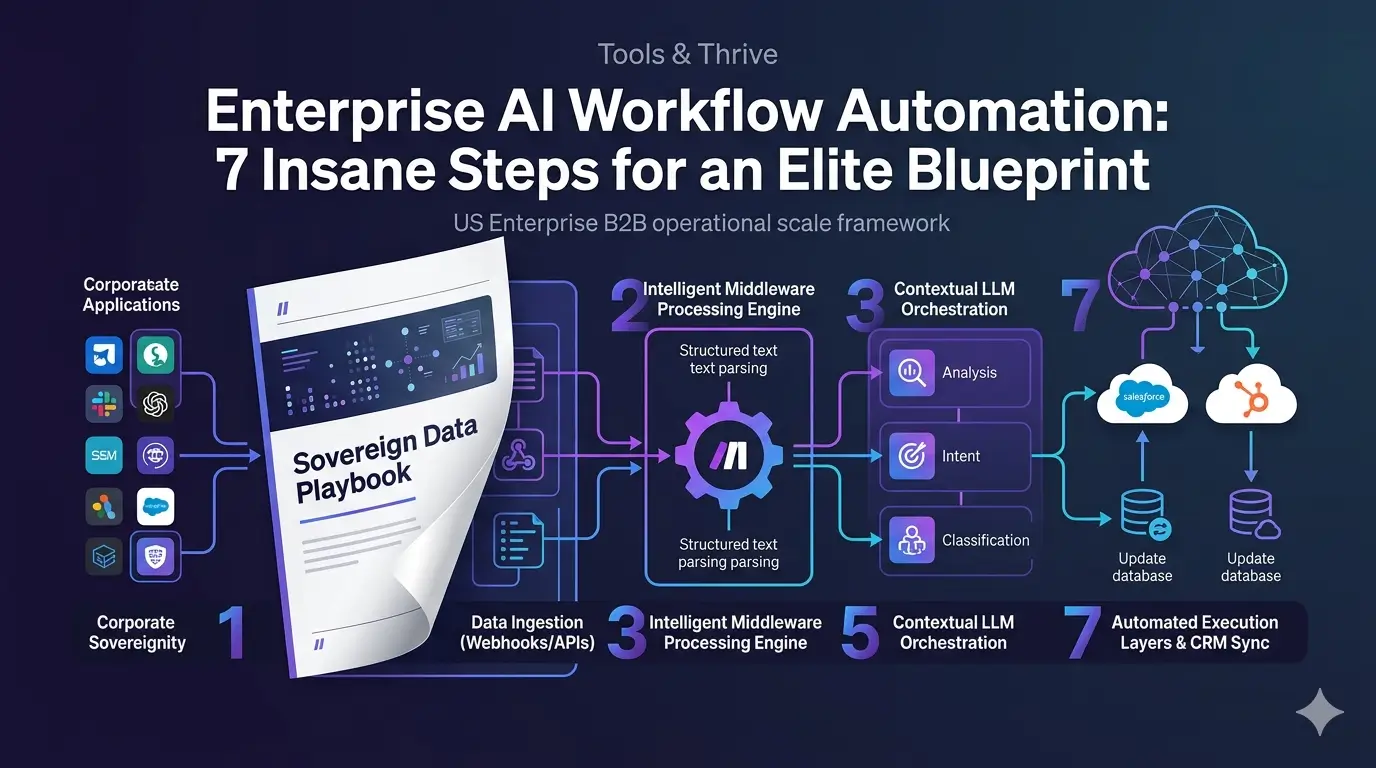

Figure 1: The 2026 Sovereign Data Playbook for deploying resilient enterprise AI workflow automation frameworks across mid-market corporate networks.
Architectural Overview
- 1. The US Enterprise Paradigm Shift: Beyond Basic API Hooks
- 2. Pillar I: Sovereign Data Ingestion and Protocol Mapping
- 3. Pillar II: High-Context Orchestration via Intelligent Middleware
- 4. Pillar III: Automated Execution Layers & CRM Synchronization
- 5. Security Standards: Navigating SOC2, GDPR, and HIPAA Privacy
- 6. Decoupling Technical Debt: The ROI Matrix for Chief Operations Officers
Implementing robust enterprise ai workflow automation is no longer an experimental initiative for forward-looking tech teams; it is the definitive operational line separating agile corporate leaders from legacy organizations burdened by massive administrative friction. As US mid-market enterprises face tightening margins and escalating data volumes, neglecting to install an unified enterprise ai workflow automation model represents a compounding structural liability.
The primary challenge corporate technical teams face is not a lack of access to artificial intelligence models, but the systemic presence of unintegrated, siloed data environments. Raw unstructured intelligence trapped within remote cloud structures, legacy databases, and detached applications leads to massive operational bottlenecks.
To resolve this overhead without inflating engineering debt, enterprise decision-makers are pivoting toward sophisticated, sovereign orchestration models. For organizations analyzing immediate monetization strategies before upgrading core systems, review our complete analysis on how to make money with ChatGPT to understand underlying baseline AI capabilities.
1. The US Enterprise Paradigm Shift: Beyond Basic API Hooks
Simple point-to-point software linkages are fundamentally insufficient for modern corporate applications. True, scalable enterprise ai workflow automation requires deep operational environments capable of handling conditional branching, complex data filtering, payload transformations, and multi-tier exception handlings without losing performance stability.
When corporate leaders evaluate workflow upgrades, the focus shifts entirely toward modern enterprise ai workflow automation platforms that integrate directly into existing ERPs, custom databases, and client portals securely. By building institutional middleware pipelines, companies can systematically turn high-volume inbound communications into instantly structured data layers ready for production processing.
Standard High-Authority Core Flow
Data Ingestion: Secure endpoints and authenticated webhooks extract unstructured text, JSON objects, and remote file payloads.
Context Evaluation: Enterprise middleware routes data strings into high-token LLM nodes to parse deep operational context, tags, and strategic intent.
System Sync: Downstream APIs parse the clean intelligence back into primary CRMs, accounting ledgers, or remote enterprise infrastructure.
2. Pillar I: Sovereign Data Ingestion and Protocol Mapping
Every stable enterprise ai workflow automation framework begins with flawless ingestion. If data inputs are fragile, downstream large language models will yield broken metrics or faulty outputs. Enterprise setups leverage secure Webhook arrays and dedicated API gateways to monitor operational channels continuously.
Whether capturing raw B2B client procurement logs, external distributor catalogs, or thousands of incoming support queries, the data must be sanitized and converted into structured formats. This process guarantees that downstream servers receive clean variables, preventing payload crashes or database misalignments.
3. Pillar II: High-Context Orchestration via Intelligent Middleware
Once clean data enters your architecture, middleware processing layers apply corporate logical filters. To establish safe enterprise ai workflow automation pathways instead of engineering massive, inflexible hard-coded systems from the ground up, modern enterprises integrate visual middleware to manage advanced data trees dynamically.
This centralized routing layer ensures that errors are isolated instantly before polluting downstream applications, maintaining a high-fidelity environment for all running enterprise ai workflow automation tasks.
| Middleware Platform | Enterprise Target Scope | Data Governance Standard |
|---|---|---|
| Make.com (Enterprise) | Complex data parsing & conditional path routing. | Advanced ISO 27001 compliance tracking. See official Make.com advanced logic documentation. |
| Voiceflow Systems | Context-rich conversational nodes & support agents. | Secure sandbox design. Reference enterprise Voiceflow design parameters. |
| Anthropic / Claude API | Deep qualitative analysis and semantic mapping. | Zero data retention (ZDR) model options. Refer to Anthropic Claude API reference logs. |
4. Pillar III: Automated Execution Layers & CRM Synchronization
The final step in mature enterprise ai workflow automation is execution. Once data has been parsed, mapped, and filtered through intelligent logic models, it must execute actions within core production ecosystems. This includes updating corporate HubSpot/Salesforce architectures, updating supply pipelines, or instantly building secure custom portals for enterprise-grade B2B targets.
By deploying end-to-end execution paths, companies wipe out manual operational delays completely. For media networks or corporate content hubs scaling their organic footprints, this structure can even automate complex content formatting across various high-CPM monetization models.
5. Security Standards: Navigating SOC2, GDPR, and HIPAA Privacy
For US-based enterprises, security compliance is an absolute, non-negotiable baseline within an enterprise ai workflow automation setup. Transferring client operational metadata through public, unverified third-party scripts introduces unacceptable legal and financial liabilities. High-authority infrastructure must enforce rigorous encryption protocols for all data in transit and at rest.
Ensure all AI middleware links leverage dedicated OAuth2 security frameworks, private virtual cloud servers (VPS), and zero-data-retention API models. This architecture ensures that your company’s proprietary data blocks or consumer records are never used to train external public language models, strictly preserving corporate privacy boundaries.
6. Decoupling Technical Debt: The ROI Matrix for Chief Operations Officers
To justify system investments, chief operations officers must analyze the absolute ROI curves generated by custom installations. The financial value realized by replacing standard manual tracking setups with specialized enterprise ai workflow automation engines is clear:
Where $H_k$ represents total manual hours saved across business sector $k$, $R_k$ is the internal operational labor rate, and $C_{infrastructure}$ measures the fixed monthly cost of running cloud middleware engines.
In typical mid-market corporate rollouts, this net yield turns positive within the first 45 days of implementation, severely proving that enterprise ai workflow automation severely undercuts the long development cycles and high capital costs required by legacy software engineering frameworks.
Modern enterprise growth requires decoupling operational scaling from linear head-count expansion. By building resilient, sovereign data orchestration pipelines, companies insulate themselves from data inaccuracies, secure their intellectual property, and unlock elite operational scale.
Next Steps for Technology Leaders
- Audit System Leakage: Pinpoint the key operational layers where staff manually export, modify, or input data arrays between isolated SaaS applications.
- Deploy Sandbox Prototypes: Use isolated staging environments within secure middleware platforms to model end-to-end data pipelines without risking production uptime.
- Enforce Compliance Baselines: Confirm all connection keys use enterprise-grade endpoints to maintain total data sovereignty.